
The live dealer casino
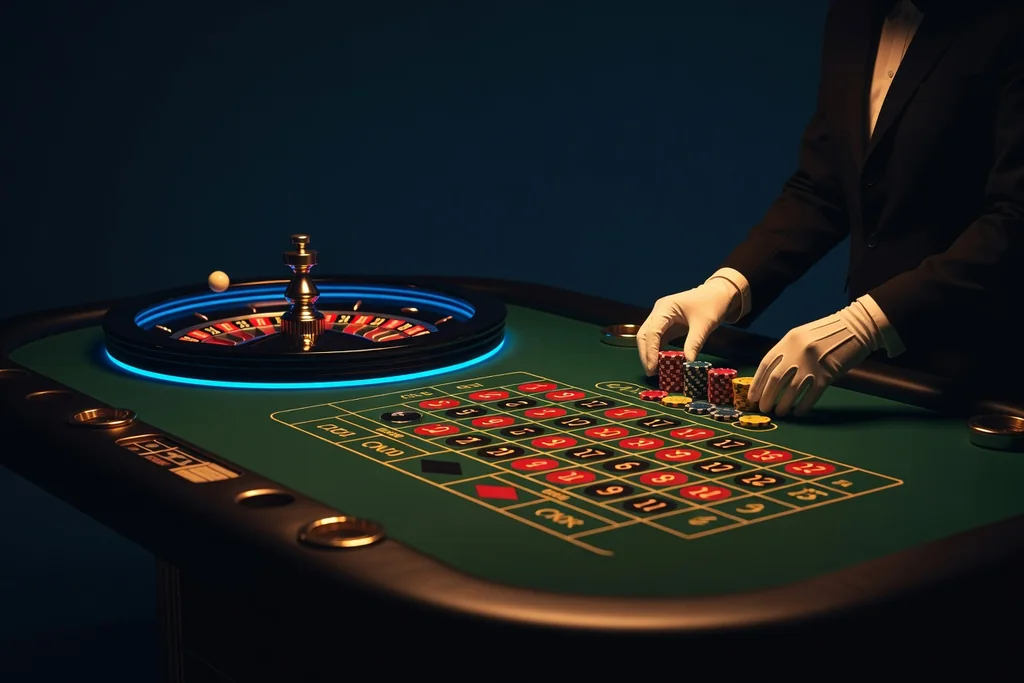
The live dealer section streams a real table with a real croupier, and it is the closest a screen comes to a physical casino. The rules of the games are the ones the games always had; what changes is the format, the pace and the sense of presence.
That sense of presence is the product, and it is also the feature that makes live tables harder to walk away from than a software slot.
How a streamed table works
A camera films a table in a studio, a croupier deals, and the result is transmitted into your browser or app. You place bets through the interface, and the software settles them from the physical outcome. Multiple players share one table, and each sees their own positions.
Because the game is physical, the pace is set by the dealer and the table, not by a spin button. That slower rhythm is often cited as a reason live tables feel fairer; it is really just a reason they feel more like a casino evening.
What the timers mean
Each round has a betting window, announced on screen. Bets placed after it closes are not accepted, and bets already placed cannot usually be withdrawn once the window shuts. The timer exists so that the table can operate legally and fairly for everyone present.
The need to decide inside a countdown is a real difference from a software game, where a decision can be postponed indefinitely. It is worth watching a table for a few rounds without betting to feel the rhythm before joining.
What to check before sitting down
| Item | Where it appears | Why it matters |
|---|---|---|
| Table limits | On the table display | Sets the minimum and maximum stake |
| Rule variations | Table information panel | Some rule sets change the odds |
| Betting window | The round timer | Bets are rejected after it closes |
| Bonus contribution | Bonus terms table | Live games often count for little |
| Stream quality | Your own connection | Lag makes timers harder to meet |
Rule variations deserve particular attention. Two tables that look identical can differ in how the dealer's hand must be played, and that difference is built into the odds rather than into the atmosphere.
Why lag matters more here
If the stream is behind the action, the timer can appear to move faster than the picture suggests. On a weak connection this creates genuine stress, and stressed decisions inside a countdown are not careful ones.
Testing the stream on the connection you intend to use, and switching to a wired or stable network for live tables, removes a problem that feels like unfairness and is really bandwidth.
Keeping live sessions in proportion
- Watch a few rounds before joining a table.
- Check limits and rule variations before the first bet.
- Decide the session's loss limit before the stream starts.
- Remember that live games usually contribute little to any bonus.
- Leave when the plan says so, not when a hand goes badly.
Chat, etiquette and the studio environment
Live tables usually include a chat panel moderated by the dealer or a host. It adds atmosphere, and it also adds a reason to stay at the table, since conversation has no natural end.
Etiquette exists on these tables and is enforced: no abusive language, no advice to other players about stakes, and no discussion of results that could be read as encouragement. Breaking it can result in being removed from the table.
The practical suggestion is to treat chat as part of the entertainment budget rather than as a reason to extend a session. It is pleasant, and it is also the most effective way for a short visit to become a long one.
Studio rules also vary by table operator, and some tables offer side bets alongside the main game. Side bets usually carry a larger house edge than the main wager, which is why they are promoted more heavily on screen.
Treating the main bet and the side bet as separate decisions is the useful approach. The side bet is a small, optional extra with worse odds, and declining it is a completely normal choice at any table.
Finally, remember that a live table is a room with a schedule. Sessions at the same table tend to look alike, and the sameness is what makes an evening disappear without a decision having been taken. Checking the clock once per shoe or per round is a small habit that keeps the visit a visit.
In short
Live dealer tables are real games in a streamed room, with real rules and a real pace. The presence is genuine, and the odds are the game's own. Knowing the limits, the variations and the timer keeps the atmosphere from becoming a reason to stay longer than planned.
Read next
Inside the casino lobby
How the game catalogue is organised, what filters do, and how to tell a demo round from a real one.
Slots: rules, reels and volatility
Reading a slot sheet, what volatility changes, and why a bigger spin is not a better spin.
Roulette, blackjack and table games
What separates strategy-based table games from pure chance, and where the house advantage sits.