
Slots: rules, reels and volatility
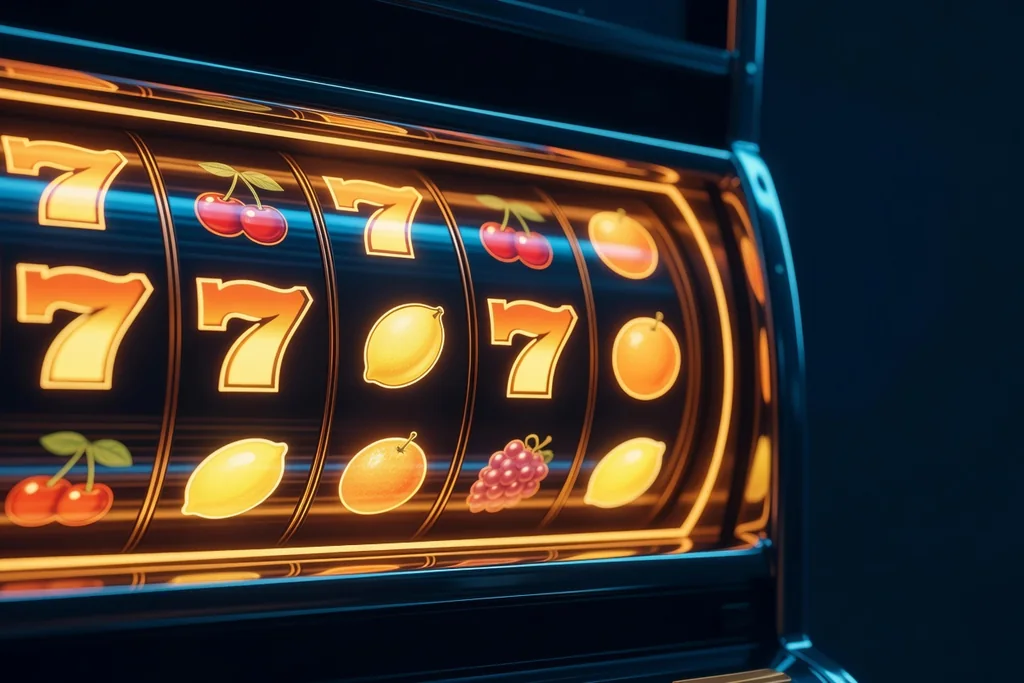
Slots are the most played games in any casino and the least examined. The interface is simple — press, spin, watch — and that simplicity hides the structure underneath: reels, paylines, volatility and the shape of the paytable. Knowing that structure changes nothing about the odds and a great deal about how well a session is understood.
Slots are games of pure chance. There is no skill input, no correct timing and no pattern in past results that affects the next spin.
Reels, paylines and symbols
The reels are the columns that spin, the symbols are what appears on them, and the paylines or ways define which combinations pay. Modern slots may have fixed lines or configurable ones, and the cost of a spin rises with the number of active lines.
Increasing active lines does not improve the odds of a symbol landing; it increases the amount staked on the same random event. This is the most common practical misunderstanding in the game.
What volatility describes
Volatility, sometimes called variance, describes the rhythm of payouts in general terms. A low-volatility slot pays smaller amounts more often; a high-volatility one pays rarely and, when it does, can pay more. Neither is better; they produce different session experiences.
Because the underlying return is fixed by the game's design, volatility affects how a budget is consumed over time rather than how much is returned on average. It is a shape, not an edge.
Auto-spin and the speed problem
Auto-spin repeats rounds without intervention. It is convenient and it removes the natural pauses where a player would otherwise decide to stop. Because nothing changes about the odds, every additional spin simply spends at the same rate with less reflection.
The practical rule is to use auto-spin, if at all, only for a stated number of rounds with a stake already decided. Automatic play with an open-ended count is an open-ended spend.
The slot's structure at a glance
| Part | What it does | Player's control |
|---|---|---|
| Reels | Generate the symbol positions | None |
| Paylines | Define paying combinations | Lines and total stake |
| Paytable | States what each symbol pays | Read it before playing |
| Volatility | Shapes the payout rhythm | Choose a preferred style |
| Bonus features | Add rounds or multipliers | None beyond triggering play |
Reading the table right to left shows how little is actually controllable. The player chooses the stake and the game, and nothing about the outcome.
Beliefs that cost money
- That a slot is “due” after a long dry spell.
- That changing the stake alters the chance of a feature.
- That a demo session predicts a real-money one.
- That a particular time of day pays better.
- That a machine can be beaten with a sequence of spins.
Every one of these rests on the same error: treating independent random rounds as if they accumulated a memory. They do not, and the game never owes a payout.
Playing with the structure in mind
Choose the stake per spin so that the number of spins you expect from a session fits your budget, and pick volatility that matches the experience you want. Then set a loss limit and a time limit, because those are the boundaries the game itself will not provide.
It also helps to read the paytable once, at least, so that the difference between a symbol that merely appears and a symbol that actually pays is clear before money is committed.
Features, free spins and what they change
Bonus features inside a slot — free spins, expanding symbols, multipliers — are part of the game design, triggered by the random outcome rather than by the player. They change what a round can pay, not how likely a paying round is.
Free spins awarded as part of a promotion are a different matter, because they carry their own conditions: a value per spin, a validity window and usually a wagering requirement on anything won.
Keeping those two ideas apart matters. A feature inside a game is a design element; free spins from a promotion are a bonus with terms. Confusing them leads to expectations that the terms were never going to meet.
In short
A slot is a fixed structure with a random engine. Reels, lines, paytable and volatility define what is possible; none of them can be influenced by play. Choose the stake deliberately, understand that each spin is independent, and never bet on a machine being due.
Read next
Inside the casino lobby
How the game catalogue is organised, what filters do, and how to tell a demo round from a real one.
The live dealer casino
How a streamed table differs from a software game, what the timer means, and what to check first.
Roulette, blackjack and table games
What separates strategy-based table games from pure chance, and where the house advantage sits.